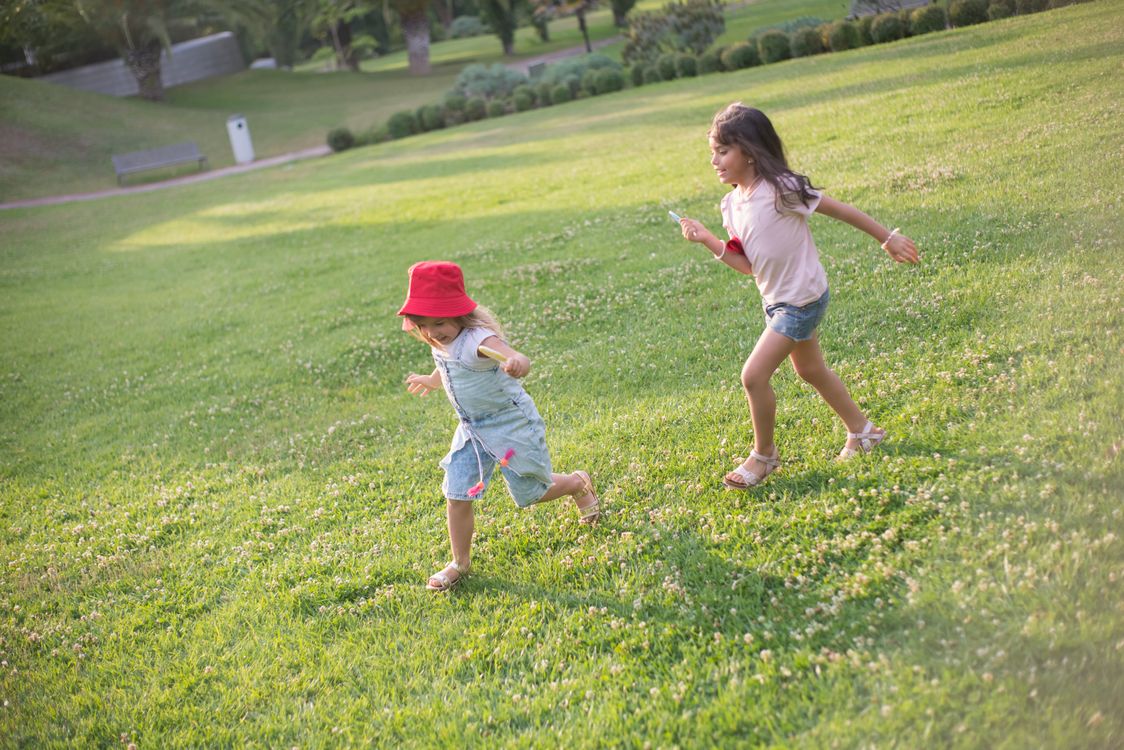
Why Your Toddler Needs More Unstructured Outdoor Play
The Backyard, Twenty Minutes, No Plan
Picture this: your toddler is standing at the back door, already reaching for the handle, coat half on, clearly not interested in negotiating. You have fifteen minutes before the next thing on your schedule. Do you let them out to just wander around the yard with no plan, no activity, nothing structured at all?
Yes. Emphatically yes. Unstructured outdoor play is one of the more underrated tools in a toddler’s development — and it asks almost nothing of you.
Why “Just Playing Outside” Is Doing More Than It Looks Like
Outdoor play gives toddlers access to movement patterns that are hard to replicate indoors — running on uneven ground, climbing, crouching to examine a bug, throwing things with real distance. These build gross motor skills and balance in ways a flat living room floor simply can’t.
It also offers unstructured sensory input: changing light, wind, temperature, the smell of grass or dirt, birds and insects moving unpredictably. Indoor environments, however well-designed, tend to be sensorially uniform by comparison.
There’s a cognitive piece too. Without a toy that tells them what to do next, toddlers outside have to generate their own activity — which builds the same self-directed thinking and problem-solving that structured toys are often marketed as teaching.
What “Unstructured” Actually Means
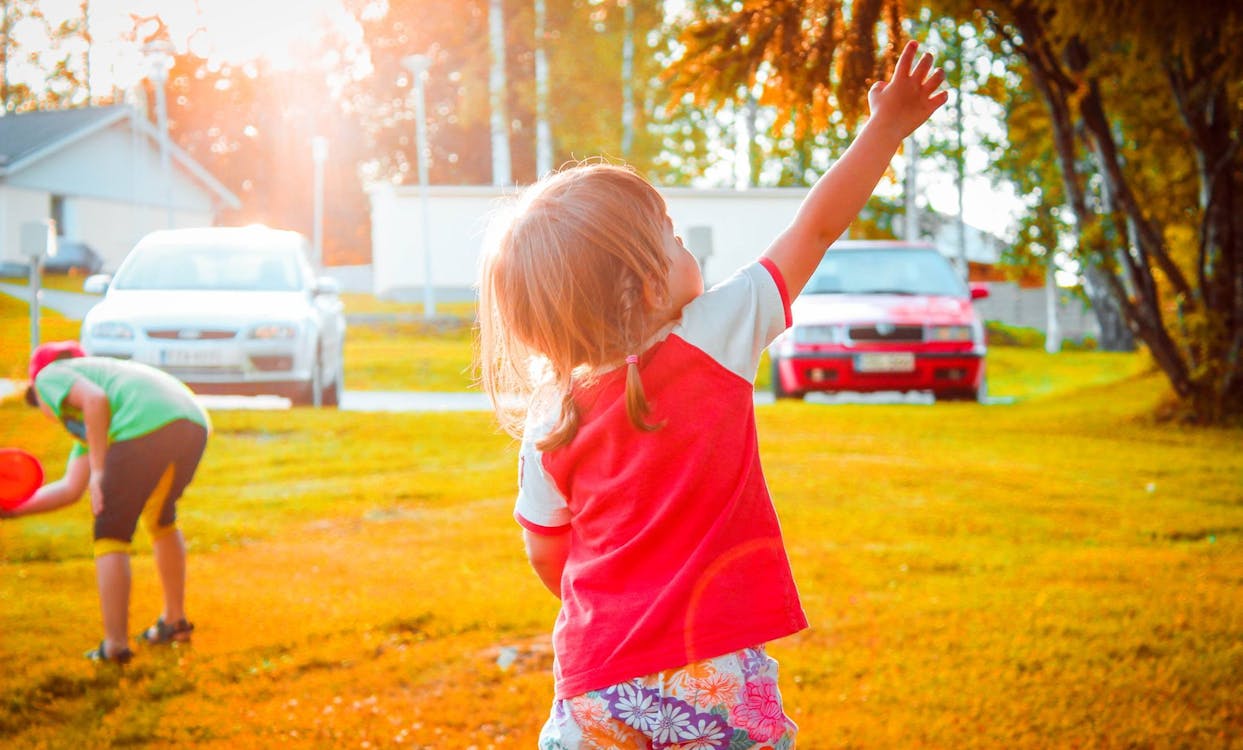
Unstructured doesn’t mean unsupervised or unsafe — it means play without a predetermined goal or adult-led activity. No craft to complete, no game with rules to follow, no lesson embedded in it. Just a yard, a park, or even a stretch of sidewalk, and permission to explore however they want within safe limits.
This can feel uncomfortable for parents used to feeling productive. Standing in the yard while your toddler pokes at a pile of leaves for ten straight minutes doesn’t look like “learning” in the way a flashcard session does. It is, though — just a kind that’s harder to photograph.
Making It Work Without a Backyard
Not everyone has easy outdoor access, and that’s a real constraint, not a failure. A few workarounds:
- A nearby park bench becomes your “office” while your toddler explores a small patch of grass or playground equipment.
- A balcony or stoop still offers fresh air, changing light, and a different sensory environment than indoors.
- Even ten minutes counts. You don’t need an hour outside for the benefits to register — brief, regular exposure adds up.
CDC’s developmental milestone checklists include physical skills like running, climbing, and balance that outdoor play naturally supports — worth a look if you’re curious what’s typical for your toddler’s age.
Resisting the Urge to Narrate Everything
One of the harder habits to break is turning outdoor time into a running commentary — naming every bird, correcting every misstep, steering toward “educational” observations. Some silence is good here. Let your toddler notice things on their own terms; you don’t have to turn every leaf into a vocabulary lesson.
If your toddler thrives on active play, Sensory Play Ideas for Ages 1-5 From Your Kitchen offers an indoor complement for the days outdoor time isn’t possible.
Browse hands-on learning tools built for exactly this stage in our store for kids.