Sensory Play Ideas for Ages 1-5 From Your Kitchen
You Don’t Need to Buy Anything
Scroll through toddler activity accounts for five minutes and you’ll see elaborate sensory bins with color-dyed rice, specialty scoops, and coordinated trays. It can make sensory play feel like one more thing that requires a shopping trip you don’t have time for.
It doesn’t. Your kitchen, right now, almost certainly has everything needed for a genuinely valuable sensory activity.
Why Sensory Play Matters So Much at This Age
Toddlers learn primarily through their senses — touch especially. Handling different textures, temperatures, and shapes builds neural pathways involved in fine motor control, language (there are a lot of new words in “smooth,” “crunchy,” “cool”), and early math concepts like more/less and full/empty.
It’s also genuinely calming for a lot of toddlers. The repetitive scooping and pouring motion has a regulating effect similar to what adults get from fidgeting or repetitive tasks — which is part of why sensory bins are a classroom staple, not just a home activity.
Five Kitchen-Based Sensory Activities
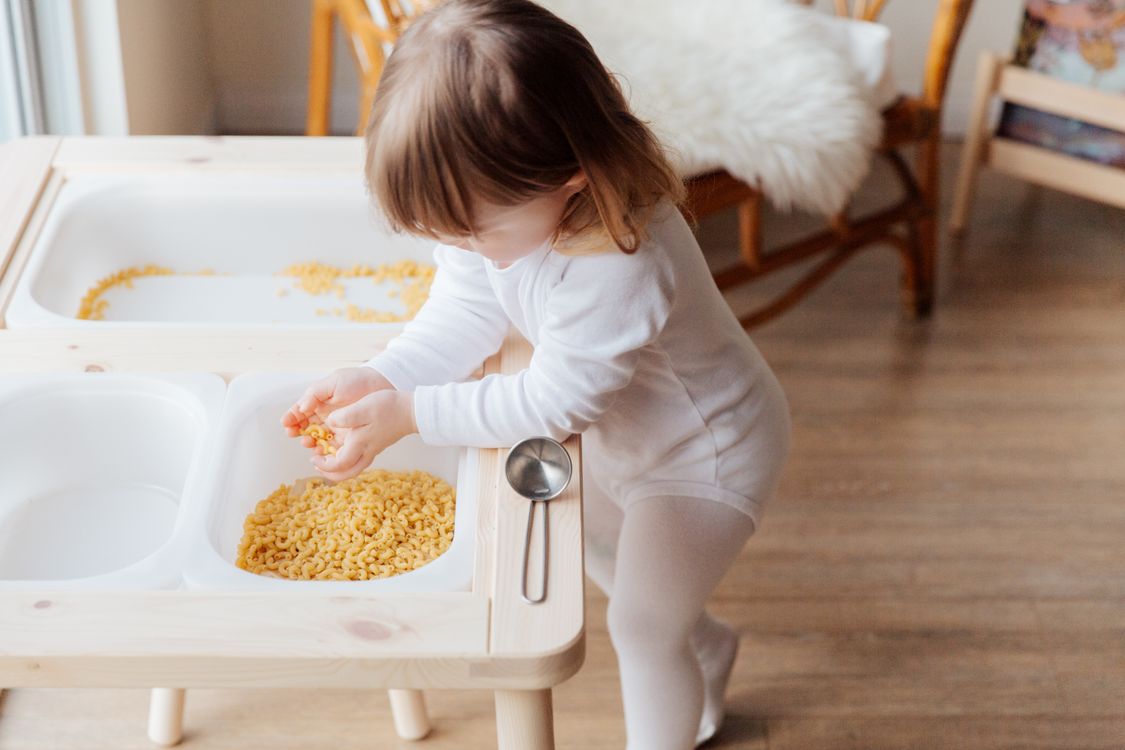
- Dry pasta and containers. Different pasta shapes in a bowl with a few measuring cups for scooping and pouring. Add a colander for a bonus “rain” effect when they pour pasta through the holes.
- Dried beans and a muffin tin. Sorting beans by color or size into muffin cups builds categorization skills alongside fine motor practice.
- Rice and kitchen tools. A shallow bin of dry rice with spoons, cups, and funnels for pouring practice — one of the simplest, longest-lasting options.
- Water and sponges. A bowl of water, a few sponges, and empty containers for squeezing and transferring — great for a change of pace from dry sensory play.
- Ice cubes and salt. Let your toddler sprinkle salt on ice cubes and watch them “melt” faster — a simple, safe intro to cause and effect.
Setting Up for Minimal Mess, Not Zero Mess
Sensory play is going to be a little messy — that’s part of the point. A towel underneath the bin, doing the activity at a low table or on the floor, and keeping it to a contained tray or bin all help keep cleanup manageable. Expecting zero mess usually means avoiding the activity altogether, which is the real loss.
Following your child’s developmental milestones around age two can help you see where fine motor and sensory exploration fit into their broader growth — a lot of what sensory play builds shows up in milestone checklists without ever being labeled “sensory play.”
Let Them Lead
Resist the urge to demonstrate the “right” way to use the materials. If your toddler wants to dump the whole bin out and start over, that’s still valuable exploration — just maybe set an expectation that dumping happens once, not five times, if patience is running low.
Building a Rotation
Keep two or three sensory activities on rotation rather than introducing something new every time. Familiarity lets your toddler go deeper into the exploration instead of just reacting to novelty — and it means less setup time for you.
If your toddler is showing more interest in structured activities lately, How Pretend Play Builds Real-World Skills in Toddlers pairs well with sensory exploration.
For more screen-free learning ideas, browse our store for kids.