How Pretend Play Builds Real-World Skills in Toddlers
“It’s Just Play” — Except It Isn’t
It’s easy to watch your toddler stir an empty pot with a wooden spoon, feed a stuffed rabbit imaginary soup, and think: cute, but not exactly educational. That assumption is one of the most common — and most mistaken — ideas parents carry about early childhood.
Pretend play isn’t a break from learning. For toddlers, it is learning, wearing a very convincing disguise.
What’s Actually Happening Inside That “Just Play”
When a toddler pretends a block is a phone or a blanket is a cape, they’re doing something cognitively significant: holding two ideas in mind at once — what a thing is and what they’re deciding it represents. That flexible thinking is an early building block for abstract reasoning, the same skill that later shows up in math, reading comprehension, and problem-solving.
Pretend play also builds:
- Language — narrating a scene (“the baby is hungry, we need more soup”) stretches vocabulary far beyond everyday conversation.
- Emotional regulation — acting out a hard feeling through a toy is often easier for a toddler than naming it directly.
- Social skills — even solo pretend play practices turn-taking and sequencing that transfer to real interactions later.
- Executive function — following an invented “rule” (the dragon only eats green food) exercises the same mental muscles used for self-control and planning.
What This Looks Like Day to Day
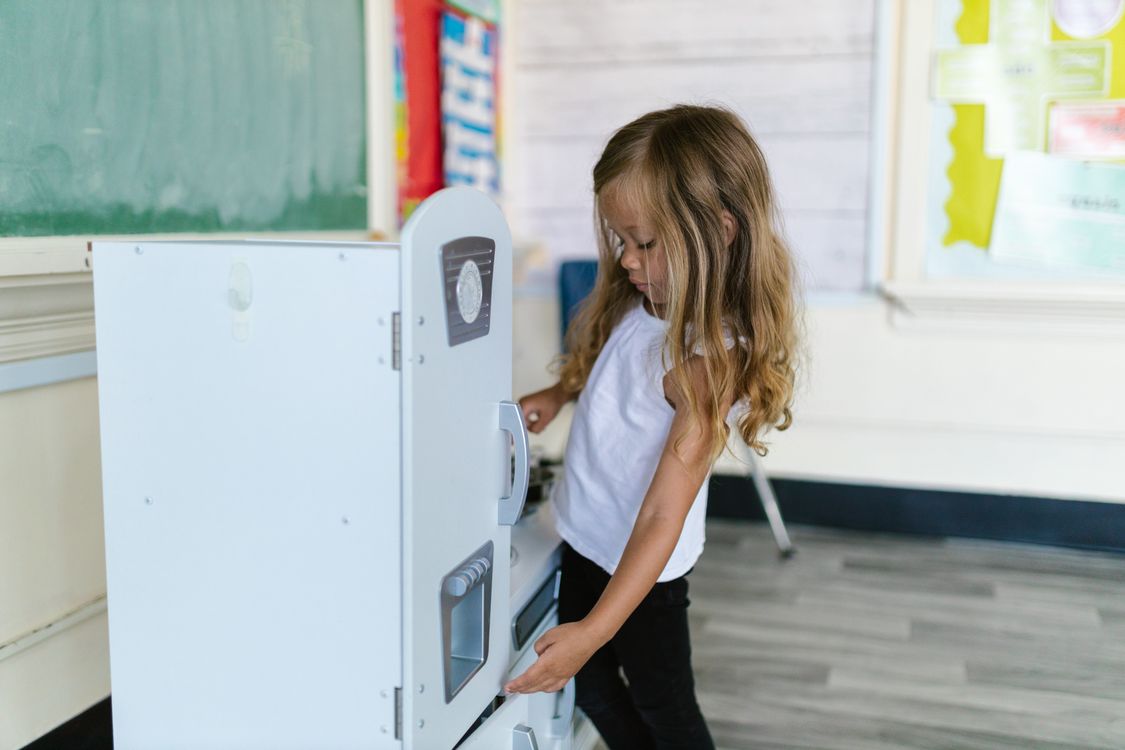
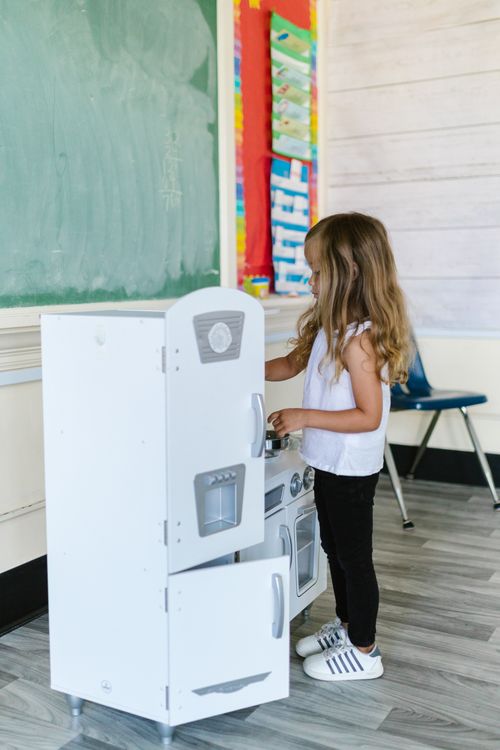
You don’t need a fully stocked play kitchen for this to work. A cardboard box, a few kitchen containers, and some uninterrupted time are enough. The magic isn’t in the props — it’s in the open-endedness. A toy that only does one thing (press a button, hear a sound) leaves less room for a toddler’s imagination to do the heavy lifting than a wooden spoon that could be a microphone, a magic wand, or a very serious mixing tool.
Watching your child’s developmental milestones can help you notice when pretend play naturally starts to emerge and grow richer — CDC’s milestone guidance is a helpful reference if you’re curious what’s typical at each age.
Resisting the Urge to Direct It
One of the harder parts for parents is stepping back. It’s tempting to correct the “wrong” way to play house or steer the story toward something more structured. But the learning lives in the child’s own choices — the more room you give them to lead, the more they’re practicing initiative and creative thinking, not just following instructions.
Your job isn’t to run the scene. It’s to be a willing customer at the pretend restaurant, an occasional patient at the pretend doctor’s office, and otherwise mostly out of the way.
A Small Shift in How You See the Mess
Next time you find yourself stepping over scattered toy food or being handed an invisible cup of tea, it might help to remember: this is the work. For more on how CDC tracks this kind of growth, you can explore their developmental milestones resources.
If you’re looking for more structured ways to build on what pretend play starts, check out Screen Time Balance: Interactive Learning Tools for Ages 1-5 for ideas that complement open-ended play.
Explore printables and interactive tools designed to grow with your little one in our store for kids.